


PDS Shares Insightful Perspective at the Central States ASLA Awards
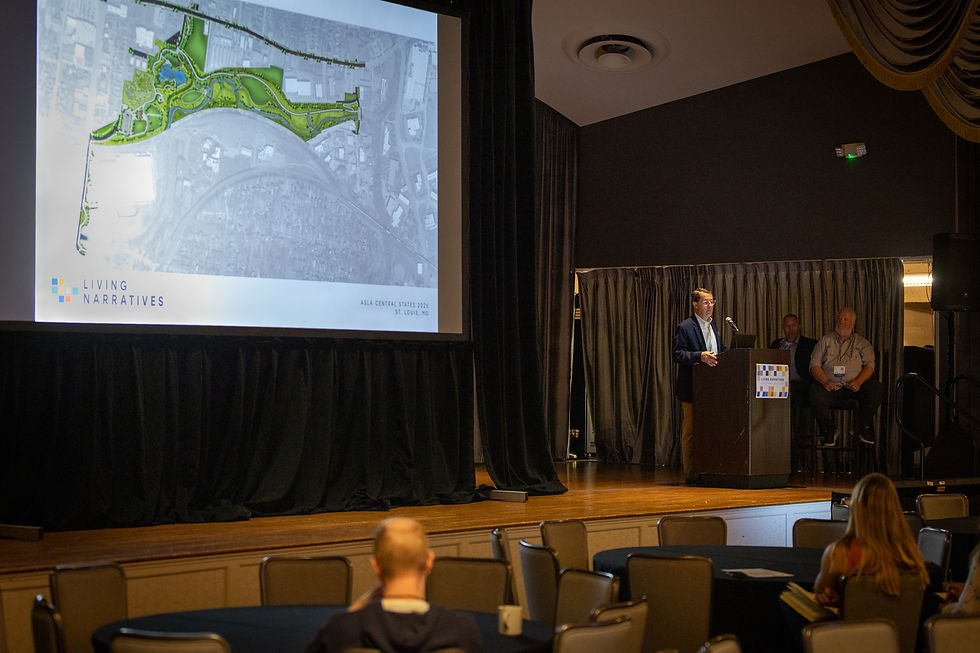
The 2026 Central States ASLA Conference brought together landscape architects, planners, students, and industry leaders from across the region to celebrate award-winning work and discuss the future of the profession. Among the featured speakers was Principal Andrew Franke, whose presentation highlighted the importance of thoughtful, community-focused landscape architecture and the evolving role designers play in shaping public spaces. Principal Scott Emmelkamp also attended the conference, joining Franke during the presentation and contributing additional insights throughout the session. Other speakers who took part in the presentation included Ted Spaid from SWT Design and Eric Gruenenfelder, Director of Parks and Recreation for the City of Brentwood.
Hosted by the Central States chapters of the American Society of Landscape Architects (ASLA), the annual conference and awards program recognized excellence in design, planning, research, communication, and community impact throughout the Midwest. The event continues to serve as an important platform for professionals to share ideas, celebrate innovation, and explore emerging trends in landscape architecture.
Franke’s presentation centered on the challenges and opportunities associated with repeated flooding along urban creek corridors, using the Brentwood Bound Initiative as a case study. The session explored how decades of flood events impacting commercial areas, neighborhoods, and roadways inspired a comprehensive approach that integrated floodplain restoration, stormwater storage, channel improvements, trail connections, and recreation amenities into a unified park and greenway system.

Rather than treating flood mitigation as a limitation, Franke discussed how water became a primary design feature throughout the planning process. Recreation spaces, including the event lawn, destination playground, and amphitheater, were intentionally designed to remain durable, functional, and safe through potential flooding.
Throughout the presentation, Franke emphasized the value of creating landscapes that are not only visually impactful but also resilient, functional, and deeply connected to the communities they serve. By weaving stormwater infrastructure into parks and public spaces, flood management systems can simultaneously enhance recreation, ecological performance, and public experience.
One of the key takeaways from the session was the importance of bridging the gap between conceptual design and implementation. Franke highlighted how successful projects often emerge through close collaboration between designers, contractors, municipalities, educators, and community stakeholders. This integrated approach allows landscape architects to create spaces that respond to environmental challenges while also supporting everyday human experiences.
Franke’s presentation added to that larger conversation by encouraging attendees to think critically about how landscapes are designed, built, and experienced. His emphasis on collaboration, education, and community-driven design reflected many of the values celebrated throughout the conference and awards program.
See below for more images from the event.
